
Home > Products > Bottle&Jar
A Summary of Bottles & Jar in Modern Packaging – Page Introduction
In the dynamic landscape of modern packaging, Bottles & Jar stand as the backbone of product delivery, preservation, and user interaction, bridging the gap between a brand’s formulation and the consumer’s daily experience. From skincare serums to household cleaners, pharmaceuticals to artisanal cosmetics, nearly every consumer and industrial product relies on a well-designed Bottle or Jar to protect its integrity, enhance usability, and convey brand value. Unlike generic containers of the past, today’s Bottles & Jar are engineered with precision—each shape, material, and closure tailored to the unique needs of the product inside, whether it’s a sensitive organic cream requiring airtight protection or a thick body butter demanding easy access.
Modern consumers no longer view Bottles & Jar as mere “holders”; they expect these containers to elevate their experience: a spray Bottle that delivers a fine, even mist for toners, an airless pump Bottle that keeps serums fresh for months, or a sleek Jar that adds a touch of luxury to a night skincare routine. For brands, choosing the right Bottle or Jar is no longer a secondary decision—it’s a strategic one that impacts product shelf life, customer loyalty, and market competitiveness. This summary dives deep into the core types of Bottles & Jar dominating modern packaging, their functional advantages, and the innovative craftsmanship that makes them indispensable in today’s market, highlighting how Bottles & Jar have evolved from basic storage tools to essential components of a product’s success.
1. Core Advantages of Key Bottles & Jar Types in Modern Packaging
1.1 Airless Pump Bottles: Superior Preservation for Sensitive Formulations
Airless Pump Bottles redefine product protection by eliminating air exposure entirely—a game-changer for formulations prone to oxidation or bacterial growth. Unlike traditional pump Bottles that draw air back into the container with each use, Airless Pump Bottles use a vacuum-sealed system: a piston at the bottom of the Bottle rises incrementally as product is dispensed, ensuring no empty space (and thus no air) enters the container. This design not only preserves the active ingredients in products like vitamin C serums or retinoid creams but also ensures zero product waste—every last drop is pushed out, maximizing value for consumers.
A key advantage of Airless Pump Bottles is their versatility across viscosities: they work seamlessly with lightweight serums, thick lotions, and even creamy foundations, making them a top choice for high-end skincare and cosmetic brands. Additionally, their airtight structure means no preservatives are needed to extend shelf life, aligning with the growing consumer demand for “clean” formulations. For brands, Airless Pump Bottles signal quality and care, as they demonstrate a commitment to protecting the product’s efficacy from production to the final use.
1.2 Spray Bottles: Hygienic, Even Application for Versatile Needs
Spray Bottles are a staple in modern packaging due to their ability to transform liquids into a controlled, atomized mist—offering hygiene, precision, and economy that other Bottles or Jar cannot match. Today’s Spray Bottles have evolved beyond basic manual pumps: many feature adjustable nozzles (allowing users to switch between a fine mist and a targeted stream) or pressurized systems that eliminate the need for harmful CFC propellants, aligning with eco-friendly packaging trends.
The primary advantage of Spray Bottles lies in their contact-free application: for products like perfumes, toners, or disinfectants, spraying avoids direct hand contact, reducing the risk of contamination and ensuring even coverage. For example, a facial toner Spray Bottle delivers a light mist that absorbs quickly, unlike a Jar where scooping can lead to product waste or bacterial transfer. Spray Bottles also excel in industrial and household settings—cleaning solution Spray Bottles cover large surfaces efficiently, while medical Spray Bottles (for topical treatments) deliver precise doses to affected areas. Their adaptability across industries—from beauty to healthcare to home care—solidifies Spray Bottles as a must-have among functional Bottles.
1.3 Roll-On Bottles: Targeted, Mess-Free Use with Sensory Appeal
Roll-On Bottles combine precision, convenience, and sensory experience, making them a favorite for products that require targeted application. At the heart of a Roll-On Bottle is a free-rotating ball (usually made of stainless steel or plastic) at the apex: when the Bottle is inverted, the ball glides over the skin, picking up just enough product to coat its surface—no dripping, no over-application. This design is especially valuable for products like deodorants (where even coverage prevents irritation) or essential oils (where precise dosing ensures efficacy).
A unique advantage of Roll-On Bottles is their massaging effect: the rolling ball stimulates blood circulation as it applies product, enhancing absorption for items like eye serums or topical pain relievers. Unlike Jar containers, which require fingers to scoop and spread, Roll-On Bottles are mess-free and portable—perfect for on-the-go use (e.g., travel-sized perfume Roll-On Bottles). Their compact size and leak-proof design also make them ideal for travel, further expanding their appeal. For brands, Roll-On Bottles offer a cost-effective yet premium alternative to bulkier Bottles or Jar, especially for niche products like anti-itch solutions or spot treatments.
1.4 Jars: Accessibility and Luxury for Thick, Viscous Products
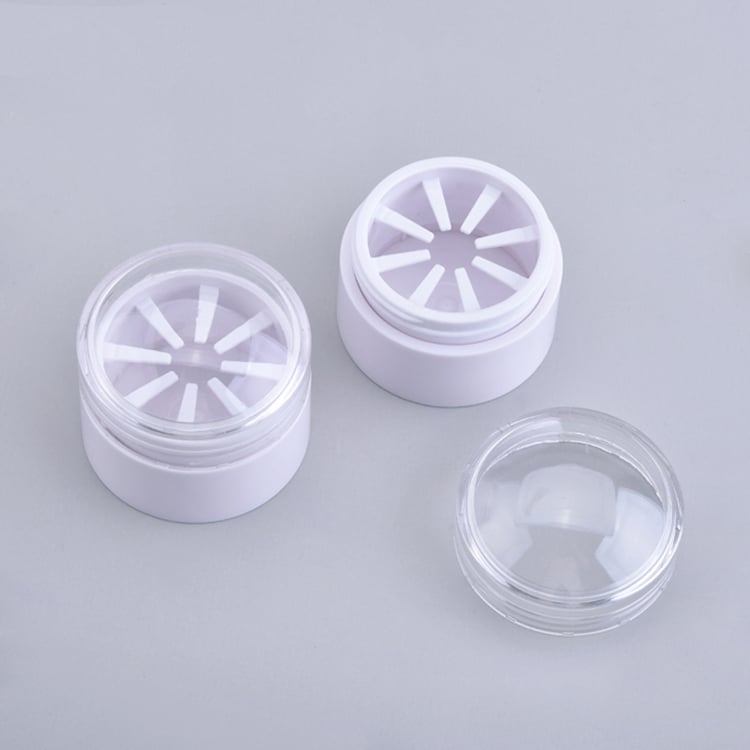
While specialized Bottles (airless, spray, roll-on) excel in protection, Jar containers remain irreplaceable for thick, viscous formulations where easy access is key. Jars are defined by their wide mouths and secure screw-top lids, allowing users to scoop or apply products directly—an essential feature for items like rich face creams, body butters, thick masks, or lip balms that cannot be dispensed through a pump or spray.
The primary advantage of Jars is their sensory and aesthetic appeal: a clear glass Jar with a metallic lid exudes luxury, making it a popular choice for high-end skincare brands looking to convey indulgence. Jars also offer transparency—consumers can see the product’s texture (e.g., a creamy mask or a glittery body scrub) before purchasing, which builds trust. While Jars have a drawback (frequent finger-dipping can introduce air and bacteria), modern designs address this with added features: some Jars include small spatulas for hygienic scooping, while others use airtight silicone gaskets in their lids to slow oxidation. For brands, Jars strike a balance between functionality and brand identity—they are versatile enough for both artisanal products (e.g., homemade lip balms) and luxury lines (e.g., anti-aging face creams), making them a enduring part of the Bottles & Jar ecosystem.
2. Craftsmanship & Technological Selling Points of Modern Bottles & Jar
2.1 Material Innovation: Balancing Durability, Safety, and Sustainability
The craftsmanship of modern Bottles & Jar begins with material selection—each material is chosen to enhance the product’s performance, safety, and environmental impact. For Bottles (airless, spray, roll-on), food-grade and cosmetic-grade plastics (such as PET, PP, and PETG) are preferred for their lightweight durability and recyclability. PETG, in particular, is ideal for transparent Bottles (e.g., toner Spray Bottles) as it offers clarity similar to glass but is shatterproof, reducing shipping damage. For premium lines, glass remains a top choice: airless pump Bottles made of frosted glass convey luxury, while Roll-On Bottles with glass bodies are favored for essential oils (as glass does not react with volatile ingredients).
Jars also benefit from material innovation: thick acrylic Jars mimic the look of glass but are lighter and more impact-resistant, making them suitable for travel-sized products. Glass Jars, meanwhile, are paired with stainless steel or bamboo lids to align with eco-friendly trends, replacing plastic lids that contribute to waste. All materials used in modern Bottles & Jar undergo rigorous testing to meet global safety standards (e.g., FDA for food contact, EU 10/2011 for cosmetics), ensuring they are free from BPA, phthalates, and other harmful chemicals. This commitment to safe, sustainable materials not only protects consumers but also strengthens a brand’s reputation as responsible.
2.2 Precision Engineering for Functional Performance
The performance of Bottles & Jar hinges on precision engineering—every component, from a Spray Bottle’s nozzle to a Jar’s lid, is designed to work seamlessly with the product inside. For Airless Pump Bottles, the vacuum system is engineered with a piston that fits perfectly inside the Bottle’s chamber, with a tolerance of ±0.02mm to prevent air leakage. The pump mechanism is tested to withstand 10,000+ presses without failure, ensuring long-term usability.
Spray Bottles feature micro-machined nozzles with channels as small as 0.2mm, which ensure a consistent mist size (50-100μm) for even application. Many nozzles are also treated with an anti-clog coating (e.g., ceramic-based materials) to prevent residue buildup—critical for thick liquids like hair sprays or cleaning solutions. For Roll-On Bottles, the ball is precision-polished to ensure smooth rotation, while the Bottle’s neck is sealed with a silicone gasket to prevent leakage, even when inverted.
Jars, too, rely on engineering for functionality: screw-top lids are designed with thread counts that match the Jar’s mouth exactly, creating an airtight seal when closed. Some Jars include a “tamper-evident” band— a thin plastic ring that breaks when the lid is first opened, assuring consumers the product is unused. For Jars holding sensitive products (e.g., organic face creams), lids may include a foam or silicone liner that enhances 密封性 (sealability), slowing oxidation and extending shelf life.
2.3 Customization & Aesthetic Craftsmanship
In today’s competitive market, Bottles & Jar are not just functional—they are brand ambassadors, and customization is key to standing out. Modern manufacturers offer endless customization options for Bottles & Jar, from shape and color to surface finishes and branding. For example, Airless Pump Bottles can be molded into unique shapes (e.g., cylindrical, square, or curved) to match a brand’s aesthetic, while Spray Bottles can be colored with custom Pantone shades or printed with matte or glossy labels.
Jars excel in aesthetic customization: glass Jars can be frosted, etched with brand logos, or painted with metallic accents, while acrylic Jars can be transparent, opaque, or tinted to protect light-sensitive products (e.g., vitamin C creams). Surface treatments like soft-touch coating (applied to Bottle or Jar exteriors) add a luxurious, velvety feel, enhancing the user’s sensory experience. Even small details—like a Roll-On Bottle’s ball color or a Jar’s lid material (bamboo vs. metal)—are customizable, allowing brands to create Bottles & Jar that align perfectly with their identity.
2.4 Eco-Conscious Manufacturing & Recyclability
Sustainability is no longer a trend but a requirement for modern Bottles & Jar, and craftsmanship now includes eco-conscious manufacturing processes. Many Bottles (e.g., Spray Bottles, Roll-On Bottles) are made from 100% recyclable plastic or bio-based plastics (derived from renewable sources like corn starch), reducing reliance on fossil fuels. Jars, too, are moving toward sustainability: glass Jars are infinitely recyclable, while acrylic Jars are designed for easy disassembly (separating the lid from the body) to improve recycling rates.
Manufacturers also optimize production to minimize waste: for Bottles, injection molding processes are calibrated to use less material without compromising strength, while Jar lids are made with thinner yet durable plastics. Some brands go further by offering “refillable” Bottles & Jar—consumers can buy large refill pouches and reuse their existing Bottle or Jar, reducing single-use plastic waste. These eco-friendly practices not only meet consumer demand for sustainable packaging but also position Bottles & Jar as responsible choices for brands looking to reduce their environmental footprint.
In conclusion, modern Bottles & Jar are the result of thoughtful design, precision engineering, and a commitment to consumer needs. Whether it’s an airless pump Bottle preserving a serum’s efficacy, a Spray Bottle delivering a hygienic mist, a Roll-On Bottle offering targeted application, or a Jar providing luxury and accessibility, each type of Bottle or Jar plays a unique role in enhancing product value. As packaging trends continue to evolve—toward sustainability, functionality, and sensory appeal—Bottles & Jar will remain at the forefront, adapting to new technologies and consumer expectations while staying true to their core purpose: protecting and delivering the products we love.

 EN
EN